
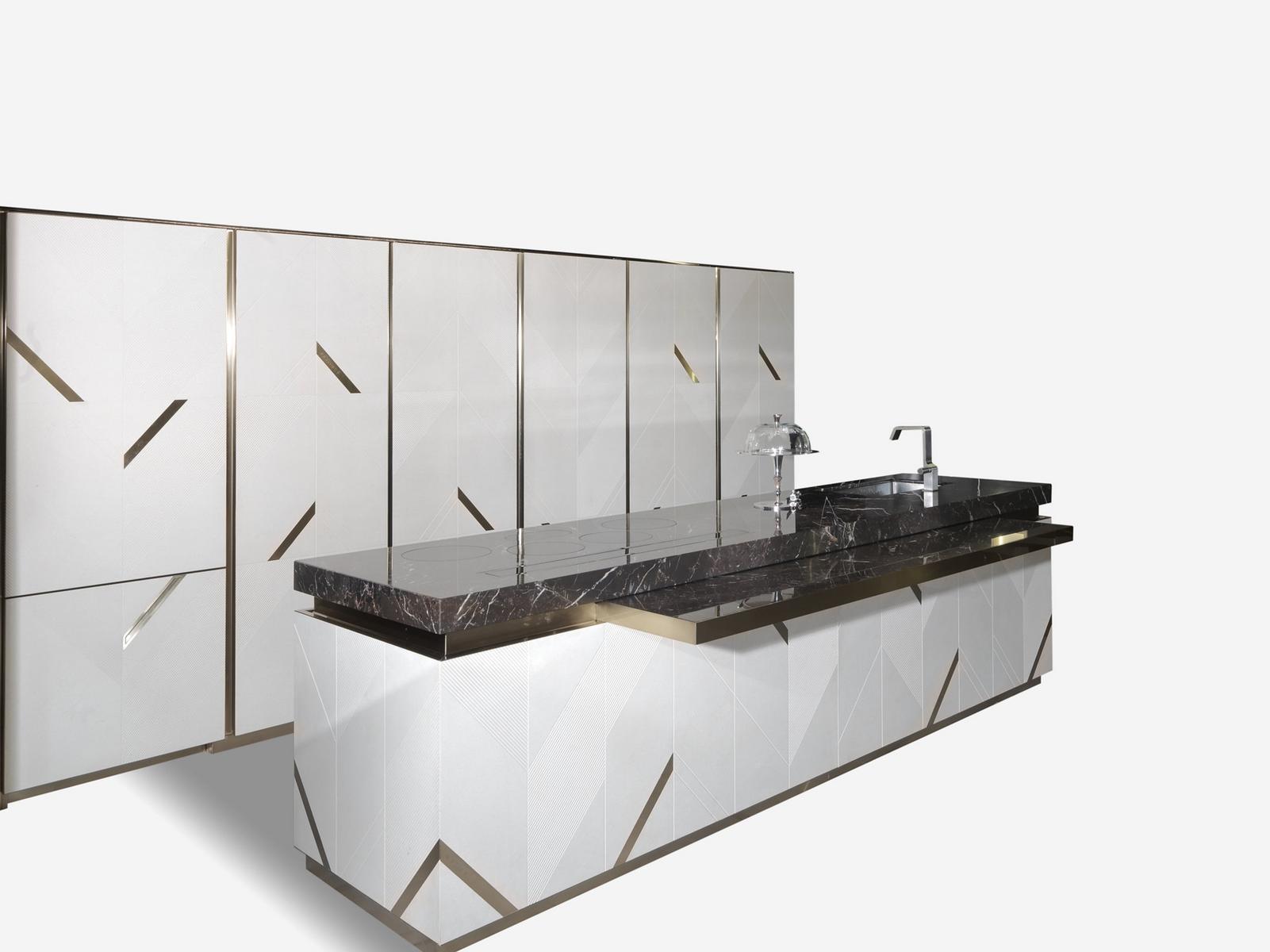
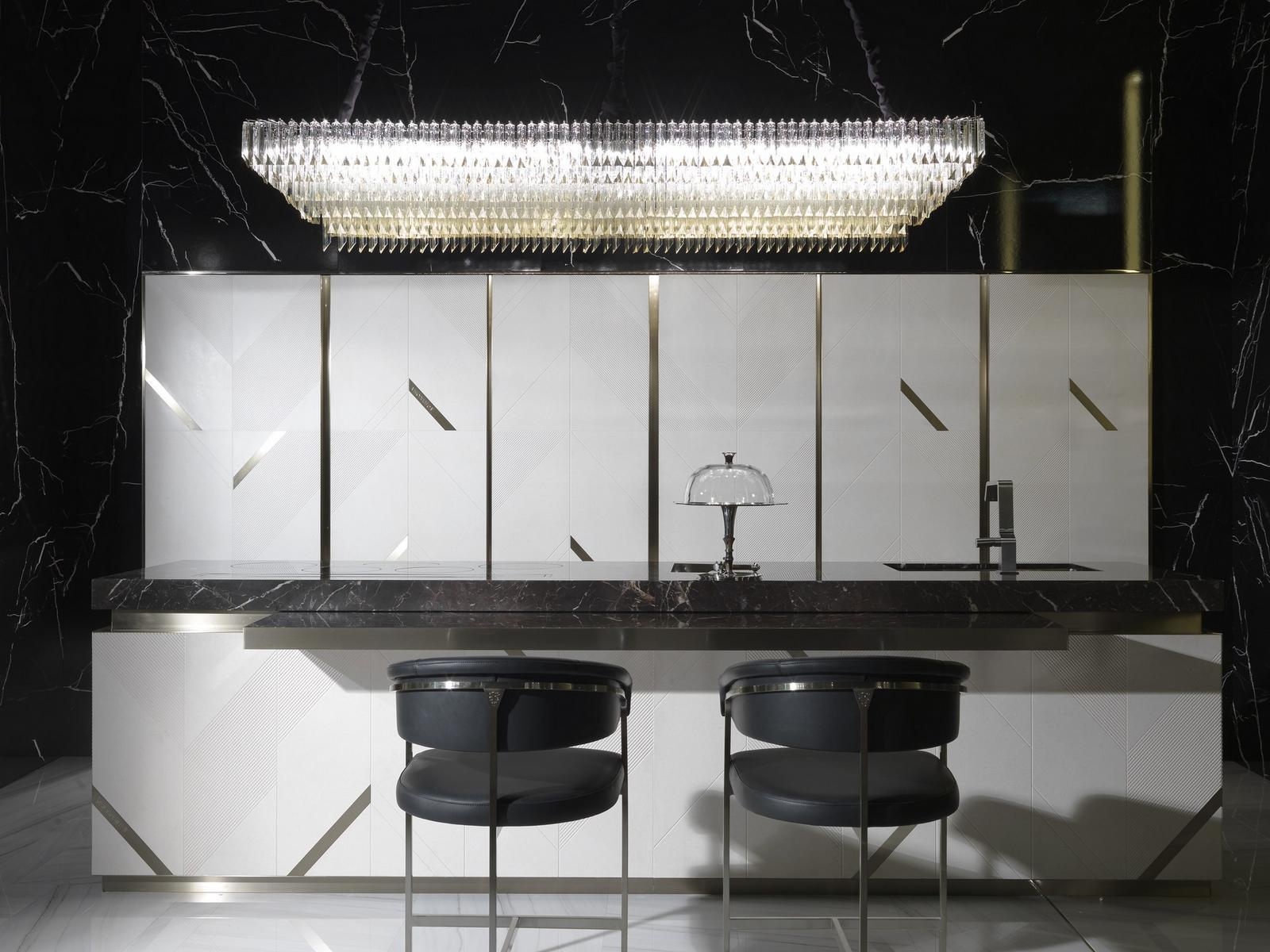
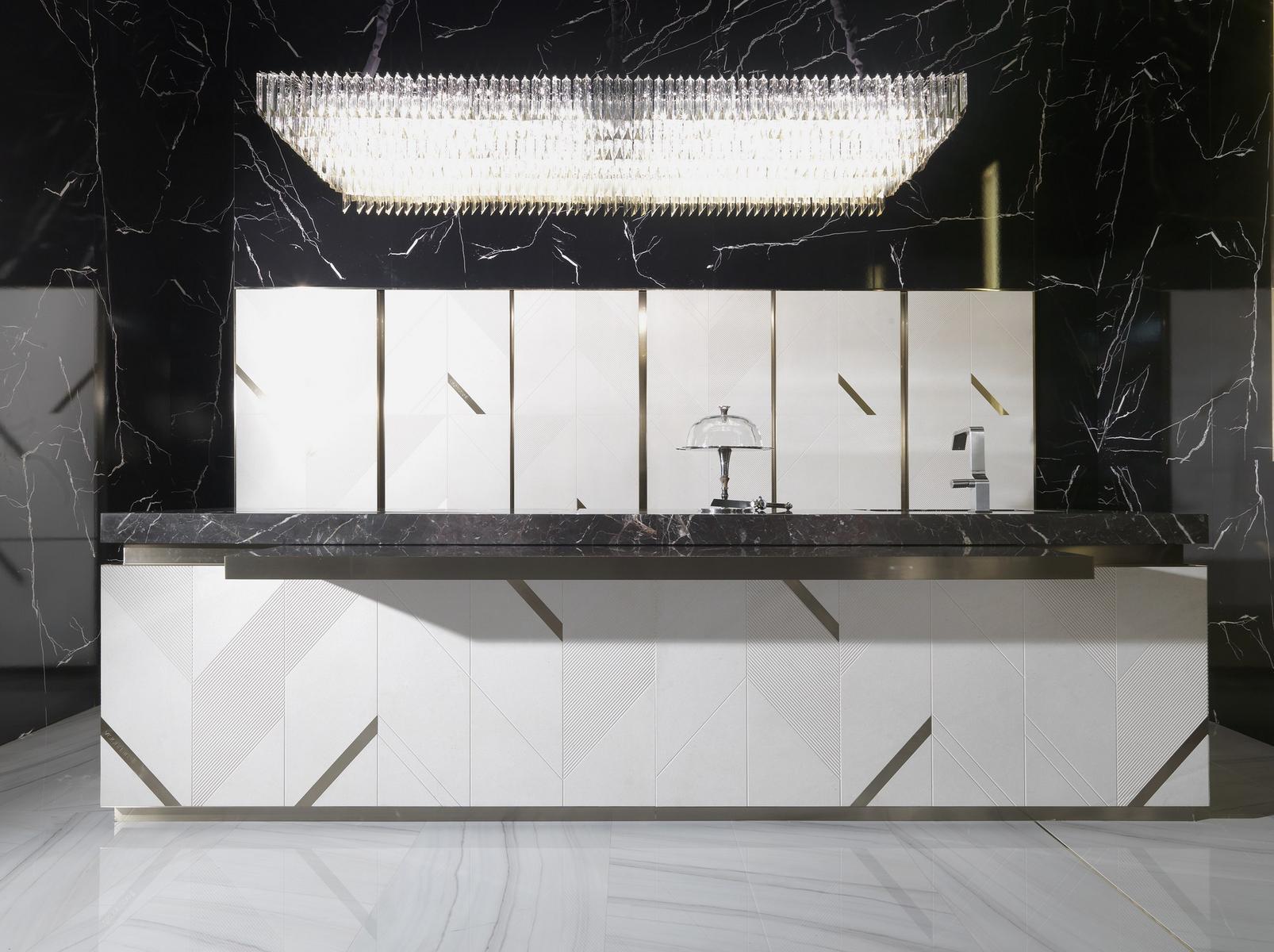
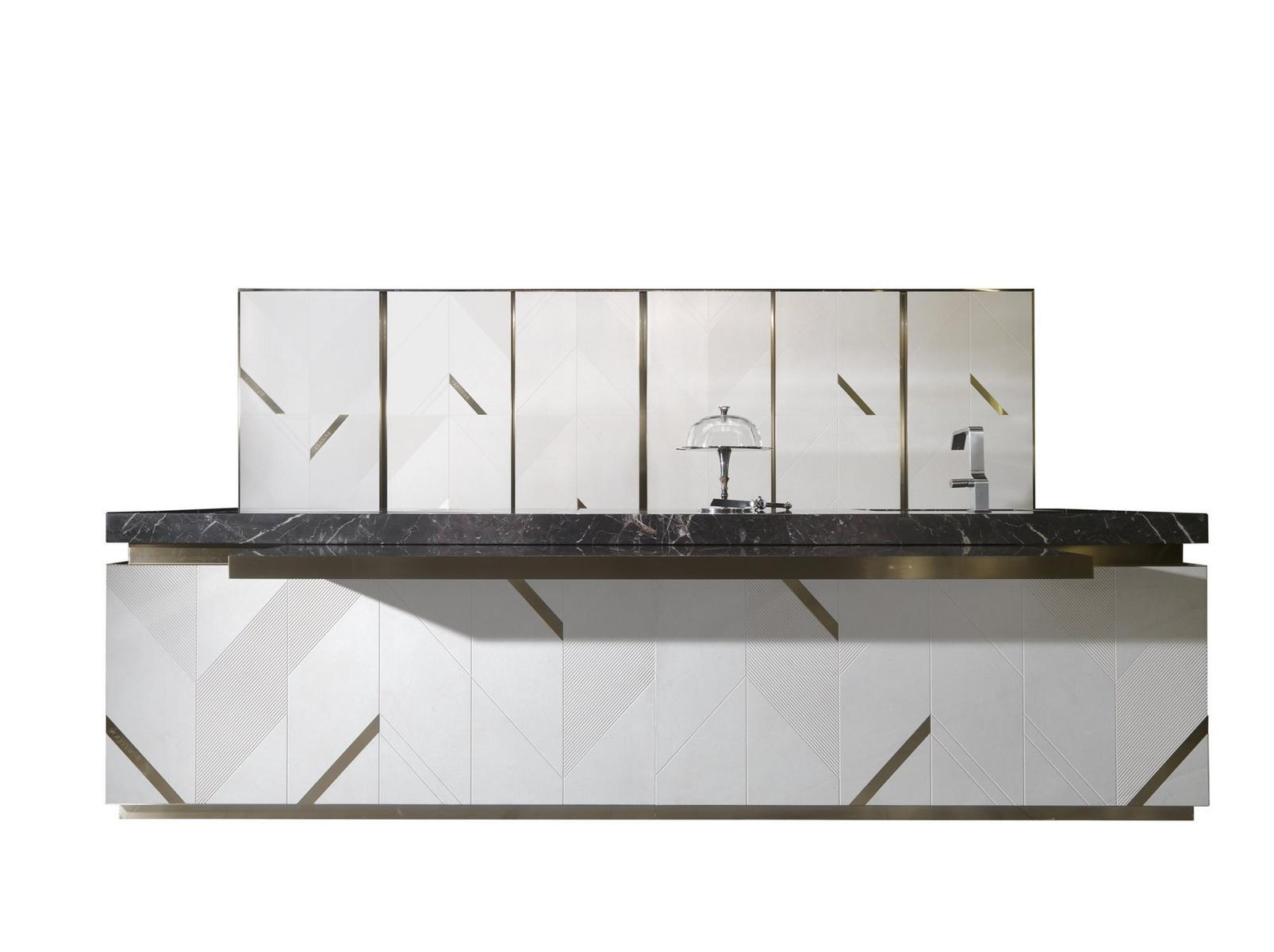
Art Deco kitchen design is about confident lines, layered textures, and refined contrast—gloss next to matte, stone next to lacquer, metal details next to warm wood tones. Beyond appearance, these kitchens are full furniture systems built to organize cooking, storage, and entertaining with the same precision as the façade design.
What is included in the Art Deco kitchen category
The section features complete kitchen solutions and related formats commonly used in premium interiors:
- Fitted kitchens designed around room dimensions and agreed zoning.
- Linear kitchens for clean architectural walls and open-plan living spaces.
- Kitchen cabinets and modules that shape storage and define the façade rhythm.
- Layouts with an island or peninsula for entertaining, extra worktop area, and seating.
Many models are marked as custom and design-focused, which is typical for Art Deco projects where proportions, symmetry, and detailing must match the interior concept.
Materials and details that define the Art Deco look
On the page, Art Deco kitchens are represented with premium finishes such as lacquered fronts, veneer, natural stone, ceramic, and metal elements, with options that may include leather accents. These materials are chosen not only for aesthetics, but also for how they behave in everyday use—cleaning, wear resistance, and long-term appearance.
- Lacquered fronts: expressive shine or deep color that highlights geometry and paneling.
- Natural stone and ceramic: used for statement surfaces and an architectural “luxury” feel.
- Veneer and wood tones: balance gloss with warmth and create a more residential mood.
- Metal details: emphasize lines, frames, and hardware—key for the Art Deco character.
- Handles and integrated handles: visible jewelry-like accents or cleaner, built-in solutions; some models also offer handleless options.
Where Art Deco kitchens work best
Because Art Deco kitchens read as a focal point, they are often selected for spaces where the kitchen is part of the main interior composition:
- Private homes and villas: large kitchens with islands and structured storage.
- City apartments and condos: linear or peninsula layouts that keep the space visually clean.
- Hospitality and boutique commercial spaces: show kitchens, lounge areas, and premium rentals where design influences value perception.
How to choose an Art Deco kitchen
To select the right model, it helps to evaluate both the “visual architecture” and the practical plan:
- Layout logic: island/peninsula placement, clearance for movement, and workflow between sink–cooktop–refrigeration.
- Surface behavior: gloss vs matte maintenance, resistance to fingerprints, and suitability for intensive cooking.
- Hardware and opening style: handles, integrated handles, or handleless—chosen to match both comfort and the intended look.
- Material pairing: lacquer with stone/ceramic for contrast, veneer with metal for warmth and structure.
- Project readiness: measurements, appliance plan, and utility points—especially important for custom kitchens.
Most items are offered as “price upon request,” allowing specification by layout, finish, and options. EuroHouse supports selection and quoting based on the project requirements, which is especially valuable for Art Deco kitchens where details and proportions define the final result.